Staple Bound: The Font That Brings Texture to Digital Design
When you're working on a project that needs to feel handmade, grounded, and slightly industrial, finding the right typeface can be a challenge. Most fonts aim for polish. Staple Bound takes a different approach. This full-color display font combines a clean sans serif structure with a unique lined paper texture and subtle staple details throughout each character. It's a creative font designed for impact, not for body text. If you're a designer, crafter, or small business owner looking for something that stands apart from standard typography, Staple Bound offers a distinctive visual voice.
Understanding the Visual Character of Staple Bound
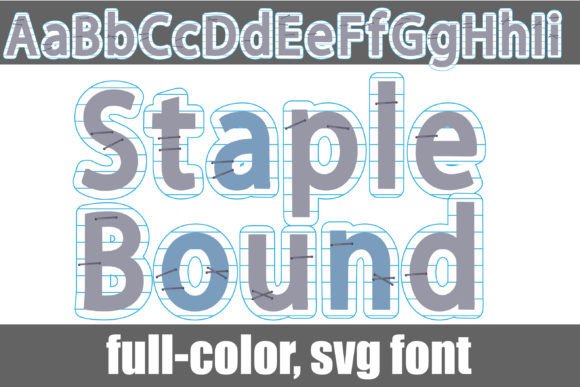
Staple Bound isn't just another sans serif font. Its personality comes from the layered details. Each letterform sits on a lined paper background, giving it a notebook or planner aesthetic. The staples scattered across the characters add a tactile, workshop feel—like something pinned to a corkboard or assembled in a studio. The full-color design means the lines, staples, and paper texture render in actual color when your software supports SVG fonts.
There's also an alternate case with additional color options accessible through your system's character map. This gives you flexibility when matching the font to a specific brand palette or project mood. The overall effect is playful but not childish, textured but not cluttered. It reads as modern typography with a handcrafted edge—ideal for projects that need personality without sacrificing legibility at display sizes.
Where Staple Bound Works Best
This is a display font, which means it shines at larger sizes. Think titles, headers, posters, event signage, and social media graphics. It's particularly effective for projects in the crafting, stationery, education, and DIY spaces. A blog header, a product label for handmade goods, a workshop flyer, or a YouTube thumbnail—these are the kinds of applications where Staple Bound adds real value.
For logo design, it works well for brands that want to communicate authenticity, creativity, or a maker ethos. It's not the right fit for a law firm or a fintech startup, but for an independent bookstore, a craft supply shop, or a creative agency with a relaxed tone, it can become a recognizable part of the brand identity. In packaging design, especially for artisan or small-batch products, the lined paper texture reinforces a sense of care and intention.
On social media, where attention spans are short and visual noise is high, a font like Staple Bound can stop the scroll. Its texture and color give it depth that flat, single-weight fonts lack. Use it for quote graphics, announcement posts, or highlight covers on Instagram. In editorial design, it works for pull quotes, section headers, or magazine cover lines where you want to break from conventional serif font or script font pairings.
How Staple Bound Influences Design Outcomes
Typography shapes how people perceive your content before they read a single word. Staple Bound signals creativity and approachability. It tells your audience that the person behind this design cares about details and isn't afraid to step outside the default font menu. That kind of visual cue builds trust with audiences who value authenticity—particularly in markets like handmade goods, independent publishing, and lifestyle branding.
Visual hierarchy is another consideration. Because Staple Bound is textured and colorful, it naturally draws the eye. Use it sparingly for key elements—a headline, a call to action, a product name—and pair it with a simpler sans serif font or serif font for supporting text. This contrast creates a clear reading path and prevents visual fatigue. A font pairing like Staple Bound with a clean geometric sans serif for body copy can feel balanced and intentional.
Consistency matters in branding. If you choose Staple Bound as part of your brand identity, make sure it appears across the right touchpoints—social media headers, website banners, printed materials, packaging. The alternate color options give you room to adapt without losing recognition. That flexibility is a practical advantage when working across different media and contexts.
Practical Guidance for Using This Font
Before committing to Staple Bound for a project, test it in context. Type out the actual words you'll use—not just the alphabet—and see how they look at the intended size. Check the alternate characters through your character map to explore color variations. Make sure the lined paper texture reads clearly at your target resolution, whether that's a printed poster or a digital screen.
Font pairing is essential. Staple Bound carries a lot of visual weight on its own. Pair it with something understated for body text. A neutral sans serif font like a clean grotesque or humanist style works well. Avoid pairing it with other textured or handwritten fonts, which can create visual competition. Let Staple Bound be the star of your display hierarchy and keep everything else supporting.
Installation is straightforward. OpenType full-color SVG fonts install like any standard .otf file. On Mac, use FontBook. On Windows, use your preferred font manager or the Control Panel. One important note: color fonts render as black in programs that don't support SVG font technology. They may also appear black in font preview windows even in compatible software. You'll know your program supports full-color SVG fonts when you type on the document and see the colors render. Adobe products, Silhouette Studio, Quark, and Inkscape all support this font type currently.
For commercial use, always review the licensing terms included with your font purchase. Most premium font licenses cover standard commercial applications—logos, marketing materials, products for sale—but some restrict use in templates or large-scale distribution. Read the specifics before launching a project. If you're a crafter using Silhouette Studio for cut files or printables, confirm that the SVG font renders correctly in your version of the software.
Staple Bound is a design asset that rewards thoughtful use. It won't work for every project, and it shouldn't. But when the brief calls for texture, personality, and a handmade sensibility, it delivers something most fonts can't—a genuine sense of craft in a digital format. Use it where it fits, pair it wisely, and let its unique character do the heavy lifting for your next creative project.